1
Home

waterborne polyurethane supplier

waterborne polyurethane supplier

  • Water Based Polyurethane Dispersion For Environmental Coating
    Water Based Polyurethane Dispersion For Environmental Coating May 20, 2026
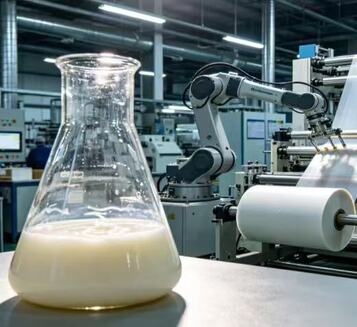
    The Eco-Core Zero-VOC Green Trait​ Traditional solvent-based polyurethane coatings and adhesives are widely criticized for their heavy use of organic solvents, including toluene (C₆H₅CH₃), xylene (C₇H₈), and ethyl acetate (CH₃COOCH₂CH₃). In contrast, water based polyurethane resin uses water (H₂O) as the continuous phase, fundamentally eliminating Volatile Organic Compound (VOC) emissions. For any Polyurethane Dispersions supplier, this eco-friendly core is non-negotiable—PUD products comply with the world’s strictest environmental regulations, such as the EU REACH Regulation and China’s "Solvent-to-Water" policy, granting end products a "green pass" that lays the foundation for successful partnerships across multiple industries.​ Core Applications & Key Advantages​ Synthetic Leather Coatings Unmatched Tactility & Eco-Friendliness​ Widely used in high-end footwear, apparel, automotive interiors, and furniture leather, waterborne polyurethane Dispersions for synthetic leather coatings stand out for their non-toxic, odorless composition—free of benzene-based solvents and eliminating residual risks of DMF and toluene. As a leading polyurethane resin manufacturer, we prioritize formulating products that meet strict safety requirements for daily-use and interior products. The versatility of polyurethane resin allows precise adjustment of soft segments (e.g., polyester polyols, polycarbonate polyols) and hard segments (reaction products of diisocyanates and chain extenders), delivering textures ranging from ultra-soft "baby-skin feel" to robust durability. Complemented by excellent physical properties like hydrolysis resistance, scratch resistance, and flex resistance, these dispersions match or even outperform solvent-based alternatives, making a reliable partner a valuable asset for synthetic leather manufacturers. ​ Industrial & Wood Coatings Balancing Performance & Sustainability​ Covering metal protection, plastic part coating, wood flooring, furniture, and construction machinery, PUD-based coatings—formulated from high-grade polyurethane resin—excel in high gloss and clarity due to pure formulations with controllable fine dispersion particle sizes. A reputable waterborne polyurethane supplier understands that the synergy between physical crosslinking sites from hard segments and flexible soft segments endows these coatings with both hardness and toughness. By optimizing formulations with hydrolysis-resistant polyols, blocked isocyanate crosslinkers, or acrylic modification, a quality manufacturer enhances chemical resistance. With self-crosslinking capabilities via ketone-hydrazide reactions and mature two-component technology (PUD-OH + HDI trimer curing agents), these coatings meet the demands of industrial anti-corrosion and premium wood finishing while complying with VOC limits.​ High-Performance Adhesives The Bonding Power of Tomorrow​ water based polyurethane resin adhesives are widely applied in footwear assembly, automotive interior bonding, composite lamination, and flexible packaging. As a dedicated Polyurethane Dispersions supplier, we tailor these adhesives to offer fast initial tack and strong final bond, tunable via molecular design, tackifying resins like terpene phenol, and particle size optimization. Their heat and creep resistance are enhanced by chemical crosslinking reactions, while their waterborne nature eliminates workplace VOC emissions— a key selling point for any responsible manufacturer. Equipped with polarity groups (-COOH, -OH, -NHCOO) that ensure excellent wetting on both porous and non-porous substrates, these adhesives are ideal for odor and VOC-sensitive sectors, making a reliable partner indispensable for brands prioritizing safety. ​ Textile Functional Coatings & Inks Tech-Enhanced & Green Expression​ In textile applications, waterborne polyurethane Dispersions create continuous, controllable microporous films (with pores vapor and >100μm for liquid water), enabling waterproof-breathable performance similar to Gore-Tex while maintaining softness and breathability. A leading supplier knows that these products easily blend with flame retardants (APP ammonium polyphosphate), antistatic agents (carbon black, quaternary ammonium salts), and water repellents, providing versatile functional solutions. Derived from high-quality polyurethane resin, these coatings are a staple for outdoor wear, protective gear, and stain-resistant textiles. The same core advantages extend to flexographic and digital inks, where these dispersions serve as a green color expression solution—reinforcing the value of a trusted polyurethane resin manufacturer in the textile industry.​ Key Competitive Advantages of PUDs​ Polyurethane Dispersions (PUD) dominate across industries due to their comprehensive strengths. For any manufacturer or supplier, these advantages are the cornerstone of success: ultimate eco-friendliness with water-based dispersion and near-zero VOC emissions; unmatched chemical versatility that allows tailoring of properties (hardness, elasticity, adhesion, etc.) by adjusting polyols, diisocyanates, and hydrophilic chain extenders; superior physical performance inheriting PU’s high strength, abrasion resistance, and flexibility; safety and health benefits by eliminating harmful solvent risks; and convenient processing with easy mixing, cleaning, and equipment compatibility. These traits make any reliable partner a critical asset for businesses pursuing sustainability without compromising performance. ​ Conclusion A Key Material for Sustainable Development​ Twenty years of progress have transformed waterborne polyurethane Dispersions — from resin prototypes to mass-produced products — into a cornerstone of industrial green transformation. As a seasoned waterborne polyurethane supplier and manufacturer, we’ve seen how PUD enhances comfort in synthetic leather, ensures safety in automotive interiors, delivers durable protection for wood surfaces, and enables smart functional textiles. High performance and environmental protection are no longer mutually exclusive—and these dispersions prove it. As global carbon reduction policies and manufacturing greening accelerate, they will solidify their position as the "Eco-Performance King" across sectors, making a trusted Polyurethane Dispersions supplier an indispensable partner for modern industry. Technology advances forward; sustainability leads the way. water based polyurethane resin and its derived products show that the path balancing both is often the most enduring.
  • Matting Technology and Development Prospects of Waterborne Polyurethane
    Matting Technology and Development Prospects of Waterborne Polyurethane Dec 18, 2025
    Waterborne Polyurethane and Matting Technology   Waterborne polyurethane, which exists as aqueous solutions, dispersions, or emulsions of polyurethane resin in water, is widely used in decorative coating applications across various fields such as construction, home furnishings, automotive, leather apparel, and household appliances. In specific scenarios where low-gloss or matte waterborne polyurethane coatings are required, matting technology becomes particularly important. △ Methods for Achieving Matting Effects Currently, matting effects in coatings are primarily achieved through two approaches: adding matting agents or modifying the resin to be self-matting. However, relying solely on matting agents, while effective in reducing gloss, can lead to issues such as sedimentation of the matting agent, reduced emulsion stability, and uneven gloss due to poor dispersion. Therefore, self-matting resins that do not require external matting agents and microsphere-type waterborne polyurethane matting resins are gaining increasing attention. △ Principle of Adding Matting Agents So, what is matting? Its core lies in creating a microscopically rough surface on the coating film. When light strikes this uneven surface, diffuse reflection occurs, reducing specular reflection and scattering light in various directions, ultimately achieving a matte effect. This phenomenon of light reflection on object surfaces is illustrated in Figure 1. Matting agents function as a physical method to alter the gloss of coatings. As water evaporates during the drying process, the matting agent migrates to the surface, creating microscopic irregularities that increase surface roughness and thereby diminish specular reflection. △ Types of Silica Matting Agents Common matting agents include metal soaps, polymer waxes, talc, and silica (SiO₂). However, metal soaps and polymer waxes may float on the surface of the solution, leading to uneven gloss in the coating film, while their dispersibility and compatibility in waterborne resins are often poor, potentially causing demulsification or gelation. In contrast, silica, as an inorganic compound, offers advantages such as ease of modification and excellent dispersibility in waterborne polyurethane systems. Silica matting agents include fumed silica, precipitated silica, and silica aerogel. Fumed silica, an ultrafine powder with surface hydroxyl groups and adsorbed water, stands out for its small particle size, large specific surface area, and high surface activity. Precipitated silica, a white amorphous hydrated silicic acid powder with spherical particles bearing various hydroxyl groups, exhibits excellent performance, simple production processes, low energy consumption, and broader applications compared to fumed silica. Silica aerogel, a lightweight nanoscale porous gel solid material, is notable for its superior structure, large specific surface area, high pore volume, narrow pore size distribution, and good transparency. △ Principle of Chemically Matte Polyurethane Matting can also be achieved through chemical methods, where light-absorbing compounds are introduced into the coating resin via chemical reactions to alter the optical properties of the coating film. Self-matting resins refer to coating resins that produce a matte surface upon film formation without adding external matting powders or waxes. Their components exhibit physicochemical properties and functional groups similar to matting agent particles, ensuring good compatibility and consistent refractive indices when blended with other resins, effectively addressing issues associated with external matting agents. Moreover, since external matting agents often differ in refractive index from the coating matrix, it is challenging to balance matting and transparency, limiting their suitability for certain applications. Therefore, self-matting coating resins that do not rely on external matting agents have attracted widespread attention. Their matting mechanism primarily involves introducing incompatible particles during polymer synthesis, such as through organic silicon modification or crosslinking modification. For example, in organic silicon-modified waterborne polyurethane matting resins, hydrophobic silicone segments migrate to the coating film surface during film formation, creating a microscopically rough surface. This imparts both organic and inorganic characteristics to the polyurethane, effectively enhancing its water resistance, thermal stability, and mechanical properties. Crosslinking modification alters the linear polyurethane structure, forming a densely crosslinked network of polyurethane macromolecules. This increases the particle size of the polyurethane emulsion, and during drying, the larger particles stack to form a rough surface. Additionally, the dense crosslinked network significantly improves the heat resistance, water resistance, and chemical resistance of the waterborne polyurethane. Researchers have successfully prepared internally crosslinked modified waterborne polyurethane self-matting resin emulsions using a post-chain extension method. The resulting films exhibit rough surface characteristics. Under varying crosslinker addition levels (0.35%, 0.45%, 0.55%, and 0.65%), scanning electron microscope (SEM) images of the films are shown in Figure 2, labeled as stages a, b, c, and d, respectively. These emulsions have an average particle size exceeding 1 μm and a gloss level of approximately 2.0 at a 60° angle, fully meeting matting requirements.   Development Prospects of Self-Matting Resins   △ Advantages of Self-Matting Resins Matte coating resins play a critical role in the application of waterborne polyurethane resins, attracting significant attention from the coatings industry while posing challenges in terms of stability. However, the emergence of self-matting coating resins and microsphere matting coating resins, which require no external matting agents and offer excellent resin stability and superior coating performance, indicates they will become a dominant trend in the future. △ Future Development Trends Therefore, it is essential to intensify research and development efforts on waterborne polyurethane matting resins to promote their broader advancement. Developing self-matting coating resins will be a key focus for the future of waterborne polyurethane.  
As a National High - tech Enterprise , we own brands like RHERI is popular in domestic markets China,but also our high - quality products have won overseas customer trust like Southeast Asia, the Middle East, South America, Africa and North America.
f LINKIDEN
Subscribe Our News
Please Read On, Stay Posted, Subscribe, And We Welcome You To Tell Us What You Think.

Sitemap Blog Xml Privacy Policy

Copyright @ Runshine New Materials(FoShan) Co.,Ltd. All Rights Reserved. Network Supported

leave a message

leave a message
If you are interested in our products and want to know more details,please leave a message here,we will reply you as soon as we can.
submit

home

products

WhatsApp

CONTACT

Leave A Message
Leave A Message
If you are interested in our products and want to know more details,please leave a message here,we will reply you as soon as we can.
submit