Waterborne Acrylic Emulsion Versatile Eco Friendly Solutions for Coatings and Future Innovations
Nov 04, 2025
Product Introduction
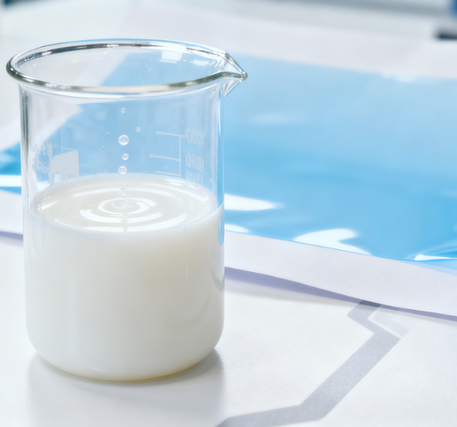
Waterborne acrylic refers to a class of polymer-based materials where acrylic polymers are dispersed in water as the continuous phase. Unlike solvent-based acrylics that rely on organic solvents, these formulations use water as the primary carrier, supplemented by small amounts of co-solvents, surfactants, and additives to optimize performance. Key characteristics include low volatile organic compound (VOC) emissions, excellent adhesion to various substrates, good film-forming properties, and resistance to weathering, chemicals, and abrasion. They are non-flammable, low-odor, and environmentally friendly, making them compliant with global environmental regulations and suitable for a wide range of industrial and commercial applications. The versatility of waterborne acrylic allows for customization of properties such as flexibility, hardness, and gloss by adjusting the polymer composition and formulation.
Application in Paper
Waterborne acrylic plays a pivotal role in paper coating, enhancing the surface quality and functional performance of paper products. It is widely used in coated paper, packaging paper, and specialty papers to improve printability, smoothness, and brightness. The acrylic polymers form a uniform, continuous film on the paper surface, filling gaps between fibers and creating a barrier against ink penetration. This results in sharper print images, better color retention, and reduced ink consumption during printing processes like offset, flexography, and gravure. In packaging applications, waterborne acrylic coatings provide moisture resistance and surface protection, extending the shelf life of packaged goods while maintaining the paper’s recyclability. Additionally, they can be modified to offer features such as anti-static, anti-blocking, or heat-sealable properties, meeting the specific needs of industries like food packaging, labeling, and graphic arts.
Application in Barrier
In barrier coatings, waterborne acrylic emulsion formulations are valued for their ability to prevent the transmission of gases, liquids, and other substances through substrates. They are commonly applied to flexible packaging films, paperboards, and metal foils used in food, pharmaceutical, and industrial packaging. These coatings form a dense, impermeable layer that blocks oxygen, moisture, oil, and aroma, preserving the freshness and quality of the packaged products. Compared to traditional barrier materials like polyethylene or aluminum foil, waterborne acrylic coatings offer advantages such as lighter weight, better recyclability, and compatibility with sustainable packaging initiatives. They also exhibit strong adhesion to various substrates, ensuring long-term barrier performance even under harsh storage or transportation conditions. Additionally, waterborne acrylic barrier coatings can be combined with other functional additives to enhance UV resistance or chemical resistance, expanding their use in high-demand applications such as sterile medical packaging and corrosive substance containment.
Future Development Directions
The future of waterborne acrylic resin is driven by ongoing demands for sustainability, performance optimization, and innovation in specialty applications. One key direction is the development of bio-based waterborne acrylic polymers, using renewable feedstocks such as plant-derived monomers to reduce reliance on fossil fuels and lower carbon footprints. Another focus is improving performance limits, such as enhancing barrier properties to match or exceed those of solvent-based alternatives, and developing high-temperature resistant or ultra-flexible formulations for extreme environments. Advances in nanotechnology will enable the integration of nano-fillers into waterborne acrylic coatings, further boosting barrier efficiency, mechanical strength, and antimicrobial capabilities. Additionally, the trend toward circular economy will drive the development of recyclable and biodegradable waterborne acrylic systems, aligning with global efforts to reduce plastic waste. Expansion into new application areas, such as 3D printing materials, automotive coatings, and renewable energy components, will also shape the growth of waterborne acrylic in the coming years.
Summary
Waterborne acrylic polymer has established itself as a versatile, environmentally friendly material with a broad range of applications, particularly in paper coating and barrier coatings. Its low VOC content, excellent performance, and compliance with environmental standards make it a preferred alternative to solvent-based polymers. In paper coating, it enhances printability and protection, while in barrier coatings, it ensures product preservation and sustainability. The future of waterborne acrylic lies in bio-based innovations, performance enhancement, nanotechnology integration, and circular economy compatibility, as well as expansion into emerging application fields. As industries continue to prioritize sustainability and functional performance, waterborne acrylic will remain a key material driving innovation and progress across multiple sectors.








 Network Supported